


 OpenAI's biggest model yet, and the government picked who gets to use it OpenAI's biggest model yet, and the government picked who gets to use it
| FULL STORY |
|
Ford rehired 350 engineers its AI was supposed to replace
| FULL STORY |
|
Developers are shipping more code and trusting it less
| FULL STORY |
What else happened today?What AI tools should I be using?Good Morning Thorium Valley. OpenAI just launched its most powerful model ever. Almost nobody gets to touch it. The government hand-picked who's on the access list — no written rules, no public criteria — and Sam Altman is already telling employees he wants this arrangement gone. The pricing is built to gut Anthropic the second the gates open. Whenever that is.
Ford quietly rehired 350 engineers that AI was supposed to replace. Turns out 94 recalls in a single year will make you reconsider how much faith you put in the automated systems.
Developers everywhere are stuck in their own version of this — output way up, trust in what they're shipping way down. AI keeps making everything faster. Making it better is a different problem.
Quickly before we dive in — Should governments have a say in who gets access to the most powerful AI models?

PRODUCTS
OpenAI launched its most powerful model ever on Friday. Almost no one is allowed to use it.
GPT-5.6, which comes in three sizes called Sol, Terra, and Luna, is only available to a short list of "trusted partners" that the US government signed off on. That's a first for a major commercial AI release, and OpenAI made the limits very clear in its own preview post. The capabilities are there. The access is not.
The reason traces back to the Trump administration, which asked OpenAI to slow the rollout earlier this week over national security concerns. A source familiar with the situation told Axios, "This is what's happening with models of that caliber," meaning the White House wants to be sure the company has the right safeguards in place before something this capable goes wide. The same regime grounded Anthropic's Fable and Mythos models just last week, so GPT-5.6 is landing in a regulatory environment that's been actively making examples out of frontier releases.
Sam Altman is not thrilled about it. In an internal memo to employees reported by Axios, he wrote that the company has "made clear to the U.S. government that this is not our preferred long term model, and will work with them and others in industry to achieve a more sustainable approach for future releases." Translated: we shipped, but we want this fixed.
The capability story underneath all of this is real. According to OpenAI's preview, the three models slot in at very different price points:
+ Sol: $5 per million input tokens, $30 per million output. The flagship.
+ Terra: $2.50 input, $15 output. The mid-tier.
+ Luna: $1 input, $6 output. The cheap one.
For comparison, Anthropic's Claude Fable 5 sits at $10 and $50. So Sol is half the input price of its closest rival and 60% of the output price. Terra is a quarter of Fable 5's input cost. OpenAI clearly wants to undercut Anthropic on price the moment the gate opens. The problem is that the gate has not really opened.
That's where the bigger issue comes in. There isn't a written framework for any of this. No statute, no public criteria, no list of which partners qualify or why. Brad Carson, who runs the bipartisan pro-AI safety PAC Public First, told CNN that the situation with Anthropic last week showed exactly what's wrong with the current setup. "Right now, you have an ad hoc, personalized, opaque, possibly lawless approach," he said. The government is making real calls on what gets shipped, and the rules are being written one model at a time.

The interesting tension here isn't whether GPT-5.6 is good. It almost certainly is. The tension is that the most powerful commercial AI model on the market right now exists in a kind of regulatory limbo where the company that built it doesn't really want this arrangement, the government hasn't told anyone what the arrangement actually is, and the customers paying for frontier access can't even reach it. If this is how every major model launch goes from now on, the real competitive advantage in AI stops being who builds the smartest thing and starts being who the White House decides to trust this quarter. Altman saying out loud that the current setup is not sustainable is not a complaint. It's a forecast.
WORKFORCE
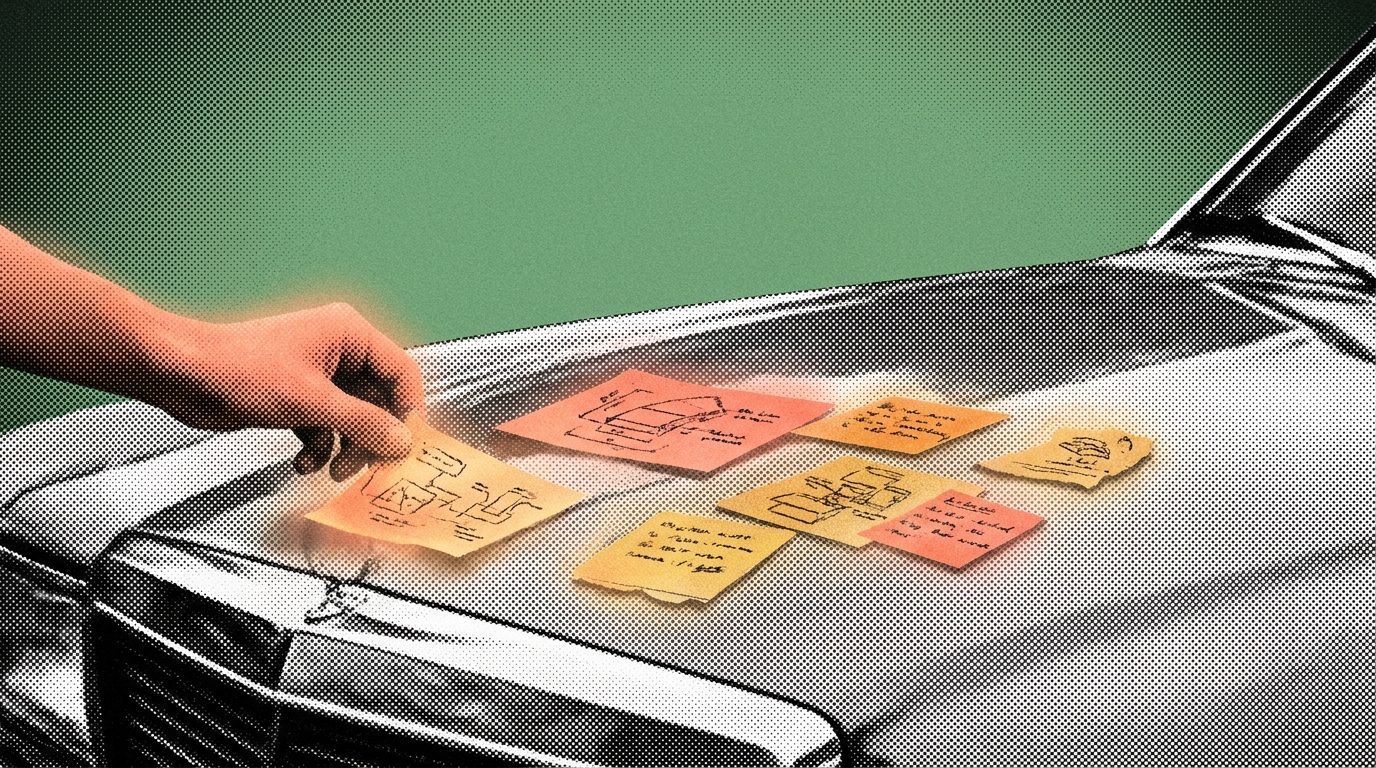
Ford has spent the last year quietly bringing back hundreds of veteran quality engineers because the AI systems meant to replace them kept missing problems the humans used to catch.
Last June at the Aspen Ideas Festival, Ford CEO Jim Farley predicted AI was "going to replace literally half of all white-collar workers in the US." About a year later, his own company was doing the opposite. According to Business Insider, Ford rehired around 350 quality engineers after concluding the automated systems on their own weren't good enough.
The admission from COO Kumar Galhotra was unusually direct for a Fortune 50 executive. "We had been relying more and more on automated quality systems and not getting the desired results," he told Transport Topics. The company brought back technical specialists to hunt for failure points before parts ever reached the line.
The miss was expensive. Ford issued 94 recalls in 2025 covering nearly 20 million vehicles, the worst year in its history. The Lincoln Aviator alone was on track for a projected 92 recalls over its lifetime, against an industry median of 3.9.
Charles Poon, Ford's VP of vehicle hardware engineering, has been the one explaining what actually went wrong. The company assumed AI plus tighter design rules would produce a quality car. It didn't. "Mistakenly, we thought that by just introducing artificial intelligence and adjusting the design requirements that we had, that that would produce a high-quality product," Poon said.
What the AI couldn't see, according to Poon, were the cracks between teams. Quality problems tend to show up at the boundaries where design, manufacturing, software, and hardware collide, and that's the kind of thing you only catch if you've shipped a dozen product cycles and know what a given supplier always screws up in week three. Ford had been feeding its systems specs and rules without the institutional memory sitting inside its most experienced people, who happen to be the same people the wider industry has been racing to automate away.
The rehires worked. Ford topped the 2026 J.D. Power Initial Quality Study among mass-market brands, a 41-point improvement year over year and the largest jump of any mainstream automaker. Seven of its ten surveyed models landed in the top three of their segments, with the F-150, Mustang, and Super Duty taking the top spot in their respective categories.
Most executives making AI-replaces-humans predictions right now are making them about jobs they have never personally done. Farley has never been a quality engineer, and he couldn't tell you what those people actually catch, because the whole point of catching it is that the rest of the company never sees the problem. Ford had to spend close to $2 billion in recall costs and torch its quality reputation to find out what its veterans were worth. The next CEO running this experiment will probably pay similar tuition. The bill will just land in a different department.

RESEARCH
Most developers now use AI at work. A lot of them don't trust what it gives them.
That's the headline finding from Google's 2025 DORA report, which surveyed nearly 5,000 tech professionals about how AI is actually landing on engineering teams. 90% of them use AI on the job. More than 80% say it makes them more productive. But 30% report little or no trust in the code their AI tools generate, and the qualitative interviews underneath that number are pretty grim.
Google ran a separate deep dive into 1,110 open-ended responses from its own engineers, and the same theme kept coming back. People are shipping more code, but they're not enjoying it. One engineer said reviewing AI-generated code "is so much harder than writing it," and that the tools are mostly increasing the volume of stuff that needs human eyes on it. Another said the productivity gains come "at a cost," with less time writing code and more time babysitting the model. A third put it more bluntly: the AI writes faster than they can, but the code is lower quality than what they'd write themselves.
This is the part the productivity charts miss. Output is up. So is throughput, deploy frequency, all the things companies like to talk about on earnings calls. The people doing the work, though, are increasingly stuck in a role they didn't sign up for, which is reading and patching machine output instead of building anything.
Menlo Ventures partner Tim Tully recently told Business Insider that software engineers are facing "an identity crisis bordering on depression," and the DORA data is basically the quantitative version of that quote. When the work shifts from creating to reviewing, the job feels different even when the paycheck doesn't. The trust problem is bleeding into adjacent fields too. A recent industry survey found that confidence in autonomous AI penetration testing has collapsed to 9%, down sharply from a year ago. The pattern is identical: the tools work fast, the output looks plausible, and nobody quite believes it.
Not every company is in this spot. Virgin Atlantic told OpenAI that Codex has turned two-week refactoring jobs into 30-minute ones, and that the bottleneck inside their teams has flipped from engineering capacity to project managers not writing tickets fast enough. That's the upside case, and it's real. But Virgin Atlantic also shipped its latest app with near-complete test coverage and zero P1 defects at launch, which tells you they've put a lot of structural work around the AI to make it land. Most companies haven't done that. Sonar's analysis of AI-accelerated codebases found that quality declines pretty reliably in environments where teams ship faster without rebuilding their review process around the new pace.
That's the actual gap. The companies winning with AI coding aren't the ones generating the most code. They're the ones whose workflows can absorb it.
The current AI coding debate is stuck on the wrong question. Everyone keeps asking whether the tools make developers faster, and the answer has been yes for about a year. The real question is whether the rest of the organization can keep up with that speed, because right now the answer is mostly no. Reviews pile up. Quality slips. Engineers stop feeling like engineers and start feeling like editors. The companies that figure out how to redesign the work around the tools are going to look very different from the ones that bolted AI onto the old process and called it a productivity win. The next year will sort those two groups out fast.
IN OTHER NEWS
+ OpenAI poaches Apple's Vision Pro chief to build its own AI hardware devices
+ Trump admin partially lifts ban on Anthropic's Mythos , granting access to 100+ companies and agencies
+ Silicon Valley paid to kill AI regulation — now it wants the rules back after chaotic export controls
+ Agility Robotics becomes first publicly traded humanoid robot company at a $2.5B valuation
+ BMW deploys Figure 03 humanoid robots on its factory floor to sort parts for the X3 assembly line
+ Chipmaker Onsemi to acquire Synaptics for $7 billion to build AI chips for robots and smart devices
+ Tesla and Sunrun turning 16 GW of home batteries into a power plant to sell energy directly to AI data centers
+ Waymo registers a company in Munich , taking its first step toward bringing robotaxis to Germany
WHO'S HIRING IN AI
+ Anthropic — Web Product Manager
+ OpenAI — Research Communications Manager, Safety
+ Johnson & Johnson — Director, Data AI Platforms
+ Credo AI — Lead Product Manager, AI Governance & Compliance
AI TOOLS
+ GitHub Copilot: Agent Mode is now live in VS Code — give it a task in plain English and it'll plan, edit files, run tests, and iterate on its own without you directing each step
+ DigitalOcean for Codex: A new plugin lets you spin up a cloud dev environment for OpenAI's Codex agent using natural language — no manual server setup required
+ Sonilo: Upload any video and this AI generates an original soundtrack that matches the pacing, mood, and edits — no prompts, no stock music libraries needed
+ Cognee 1.0: An open-source memory layer for AI agents — four commands (remember, recall, improve, forget) that let your agents learn from past mistakes instead of repeating them
+ Ramen Aura 15.0: An AI assistant for game developers that works inside Unreal Engine and Unity — now with unlimited usage and custom workflow automation
That's all for today. If this issue made you think, share it with someone who needs to think harder.
Written by Jason Chen, Advait Prakash, Andrew Hales, and the Thorium Valley crew.
That's all for today's Thorium Valley. See you tomorrow.