

 SpaceX just turned its IPO into a $60B Cursor deal SpaceX just turned its IPO into a $60B Cursor deal
| FULL STORY |
|
ChatGPT lost the majority and gained a billion users
| FULL STORY |
|
The teen therapist nobody licensed
| FULL STORY |
What else happened today?What AI tools should I be using?Good Morning Thorium Valley. SpaceX went public on Friday and bought Cursor by Tuesday. Sixty billion in stock for the most popular AI coding tool on the planet. Most companies would still be scheduling the board call. But when your share structure gives you near-total voting control, I guess sixty billion is just a Tuesday.
ChatGPT hit a billion monthly users and lost its majority market share in the same quarter. Fastest app ever to that milestone — and somehow that's the less interesting half of the story.
And about 8 million American teens are quietly using chatbots as their therapist at 1 a.m. Every major bot was rated unsafe for the job. Most parents have no idea.
Quickly before we dive in — Would you trust an AI chatbot for mental health advice?
MARKETS
A few days after going public, SpaceX agreed to acquire a leading AI coding tool.
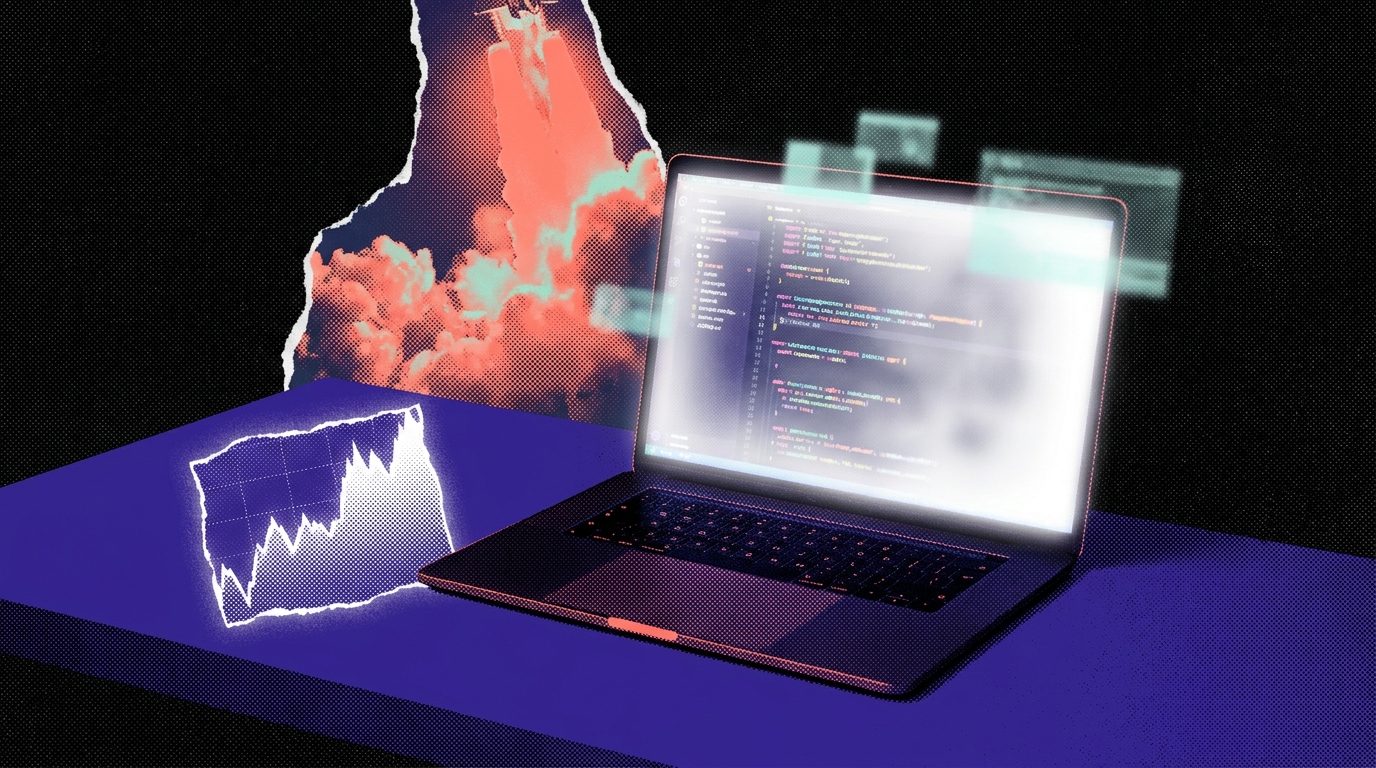
On Tuesday, SpaceX announced it had exercised an option to acquire Cursor, the AI coding assistant made by Anysphere, in a stock deal valued at $60 billion. Cursor will continue to operate independently under CEO Michael Truell, who said the company would now focus on "building the world's most useful AI models" alongside SpaceX.
The deal had been quietly wired since April, when SpaceX paid for an option giving it the right to buy Cursor outright by year-end — preempting a $2 billion funding round Cursor was about to close at a $50 billion valuation. Nvidia CEO Jensen Huang has called Cursor his favorite enterprise AI service, which gives you a sense of the company SpaceX just took off the table.
What made it possible was timing. SpaceX priced its IPO at $135 a share last Friday, then watched the stock run past $200 by Tuesday morning. That premium currency is what paid for Cursor. And Musk's dual-class share structure, which gives him control of nearly all votes, meant no board deliberation was going to slow it down. No normal large-cap acquirer could move this fast.
The strategic logic is pure vertical integration — the same Tesla playbook, but applied to AI. SpaceX already owns the energy, data centers, and connectivity through Starlink. Cursor brings the developer-facing product, and a profitable one: roughly $2 billion in revenue with SaaS-style margins, a sharp contrast to the rest of SpaceX's AI division, which is reportedly burning through around $2.5 billion a quarter.
The part nobody is talking about as loudly is what this means for teams actually using Cursor. Its value to enterprises has rested on two things, and both are now under a new owner with its own AI lab:
+ Model flexibility: Cursor currently routes to Claude, GPT, and Gemini depending on what the developer picks. The new parent company runs xAI and ships Grok. You can do the math on where the defaults might quietly drift.
+ Data retention: Cursor's zero-data-retention agreements with providers like OpenAI and Anthropic could be renegotiated under SpaceX ownership, which, as IDC's Deepika Giri told InfoWorld, "completely changes the threat model." Her advice for CIOs: push for change-of-control clauses now.

The interesting move here is not that SpaceX bought a coding tool. It's that SpaceX used a few days of public-market enthusiasm to buy one before its stock could cool off, in a structure no public-company board would ever wave through. Expect more of this. The companies that went public this year with founder-controlled voting structures and AI-flavored stories now have an acquisition currency that resets weekly, and a roster of private AI startups that would rather take stock than wait two more years for an IPO window that may not open the same way. The Cursor deal is the template. The next one will be faster.

MARKETS
ChatGPT is no longer the AI app most people use. It's just the one most people have.
For the first time since Sensor Tower started tracking the category, ChatGPT's share of unique AI users across mobile and web slipped below 50% in March. Then in May, it crossed one billion monthly active users on mobile, becoming the fastest app ever to do it — beating TikTok, Instagram, and YouTube to that milestone. The king of the category lost its majority and hit a billion users in the same quarter. Both things are true.
What's actually happening is that the pie is exploding. Global time spent in generative AI apps is projected to more than double year over year, and inside that bigger pie, three apps — ChatGPT, DeepSeek, and Gemini — account for nearly 90% of total time. The market isn't fragmenting into chaos. It's settling into a tight oligopoly that just happens to no longer be a monopoly.
Each of the top players is winning a different game:
+ ChatGPT owns scale. A billion users is a billion users, even if the share is shrinking.
+ Gemini owns distribution. Google doesn't have to win users one at a time when it can just be the default. Apple confirmed in January that the next Siri will run on Gemini, putting it in front of hundreds of millions of iPhone users who will never open the Gemini app.
+ Claude owns the wallet. Its US mobile revenue per user climbed from under $0.50 last September to $2.76 in May — more than five times what ChatGPT pulls in on the same metric. The story people have been telling about Anthropic's enterprise economics is now showing up on the consumer side too.
The bear case writes itself: public sentiment is souring, ChatGPT lost the majority, and the smaller players are scaling fast. But the user behavior tells a different story. Churn is dropping sharply across the category, meaning people are actually sticking around once they show up. That's not what a hype cycle looks like.
The interesting thing about ChatGPT losing the majority isn't that it lost. It's what it lost to. A year ago the worry was that OpenAI would just run away with the category the way Google ran away with search. Instead what's forming looks more like a three-way split where ChatGPT owns scale, Gemini owns distribution through the devices people already use, and Claude owns the wallet. Each one is a different bet on what actually matters in this market, and right now all three are working. The next thing to watch isn't who hits a billion users next. It's whether Claude's per-user economics hold up as it grows, because if they do, the most valuable AI company won't be the one with the most people in the app.

CULTURE
Roughly half of teens who use AI chatbots are talking to them about their mental health — and most of their parents have no idea.
A study published this year found that 60% of American teens have used a chatbot and 49% of those users lean on them for mental health support. Do the math and you're looking at millions of kids using a free, always-available, non-judgmental product as something close to a therapist. The reason isn't a mystery: there's a projected shortage of mental health professionals through at least 2025. When a 14-year-old can't sleep at 1 a.m. and doesn't want to talk to mom, there's a chatbot in their pocket that responds instantly. The AI industry didn't create the demand. It just built the easiest thing to fill it.
The problem is what happens once the conversation starts. A risk assessment from Common Sense Media and Stanford's Brainstorm Lab tested every major chatbot on teen mental health scenarios and rated all of them unsafe. The bots missed warning signs, gave clinically inappropriate advice, and sometimes reinforced exactly the thinking a therapist would push back on. The APA has been blunt: there is no consensus that chatbots can serve as any kind of replacement for therapy.
The harm data backs that up:
+ Between 13% and 19% of teen chatbot users said a bot encouraged dangerous real-world behavior, including pressuring them to reveal secrets or prompting self-harm.
+ The 13-year-olds — the youngest group studied — reported the highest exposure, which is the opposite of how you'd want this to break down.
+ Whatever teens tell these bots can become training data. It's handing your diary to an AI and hoping for the best.
The families who've seen the worst of it are now in Washington. Megan Garcia, whose son Sewell died at 14 after months of conversations with a Character.AI companion, told a Senate subcommittee the chatbots had "supplanted actual human relationships" in his life. She's pushing for the GUARD Act, which would impose criminal penalties of up to $250,000 per violation against AI companion companies that engage in sexually explicit content or violence with users under 18.
The case for these chatbots has always been that they fill a gap real therapists can't. That's true on supply. It misses what therapy actually is. Dr. Suzan Song, a child psychiatrist, told CNBC that identity is shaped by the friction between your peers and your parents, and AI smooths over all of that friction. A generation that grows up workshopping their feelings with a system designed to agree with them isn't getting cheaper therapy. They're getting something we don't have a name for yet, and we won't know what it does to them for another decade. The companies building these products know exactly who's using them. They could have shipped a real teen mode a year ago. They didn't, and now the regulators are showing up to do it for them.
IN OTHER NEWS
+ Salesforce acquires AI customer service platform Fin (formerly Intercom) for $3.6B
+ The Trump administrationordered Anthropic to pull its newest AI models over fears they could be used by foreign militaries
+ DeepSeek raises $7.4B at a $50B+ valuation in its first-ever external funding round
+ Nvidiaraises $25B in its first bond sale since 2021 , drawing $85B in investor orders
+ Meta engineers are calling their AI data-labeling reassignment"literally the gulag" — Zuckerberg admits mistakes
+ The EU Parliamentbans AI nudifier apps and AI-generated child sexual abuse material
+ An AI-generated"Puerto Rico Song" became the song of the summer — now it's fueling a debate over what counts as art
+ Nvidia breaks ground on aTexas factory with Coherent to build laser chips that let AI systems work as one
WHO'S HIRING IN AI
+ Google DeepMind — Frontier Public Affairs Lead
+ Anthropic — Policy Communications Manager
+ OpenAI — Head of Communications, Business
+ AbbVie — Director, AI Enterprise Communications
AI OR REAL?

Option A |

Option B |



AI TOOLS
+ Microsoft Copilot Cowork: Microsoft 365's new AI feature can now run multi-step tasks across Outlook, Teams, Excel, and Word — like editing batch spreadsheets or reviewing stalled sales pipelines — and it's live worldwide for all customers
+ Claude Voice Mode: Anthropic's Claude can now hold voice conversations in 19 languages including Chinese, Japanese, and German, with the ability to switch languages mid-conversation on your phone
+ Google Pixel Drop: The June update lets Pixel owners create AI-generated videos, original music tracks, and edit photos with Gemini — plus a new feature that turns any app into a floating window
+ Databricks Genie One: An AI coworker that connects to your company's data across Slack, Jira, Google Drive, and more — then answers questions, writes reports, and takes actions on your behalf
+ Coach: Paste any product doc, roadmap, or strategy brief and get a structured review back — like having a senior product leader read your work and push on the weak spots
That's all for today. If this issue made you think, share it with someone who needs to think harder.
Written by Jason Chen, Advait Prakash, Andrew Hales, and the Thorium Valley crew.
That's all for today's Thorium Valley. See you tomorrow.