

 Your next laptop costs more because of AI Your next laptop costs more because of AI
| FULL STORY |
|
Inside the black market for stolen AI tokens
| FULL STORY |
|
741% more code. 6% more software shipped.
| FULL STORY |
What else happened today?What AI tools should I be using?Good Morning Thorium Valley. Apple just hiked MacBook prices by 18%, and it's not tariffs. The AI boom is burning through memory chips so fast that everyone else gets to fight over the scraps. Tim Cook says he's never seen anything like it in 40 years. So congratulations — your next laptop is quietly subsidizing the AI race.
Stolen Claude tokens are apparently an entire underground market now. Chinese resellers, payments fraud, 70-90% discounts. Anthropic told the Senate that Alibaba might be buying in. When your AI model has a black market, you've arrived.
And developers using AI tools are writing 741% more code but shipping about 6% more actual software. The code is flying out. It's just not going anywhere.
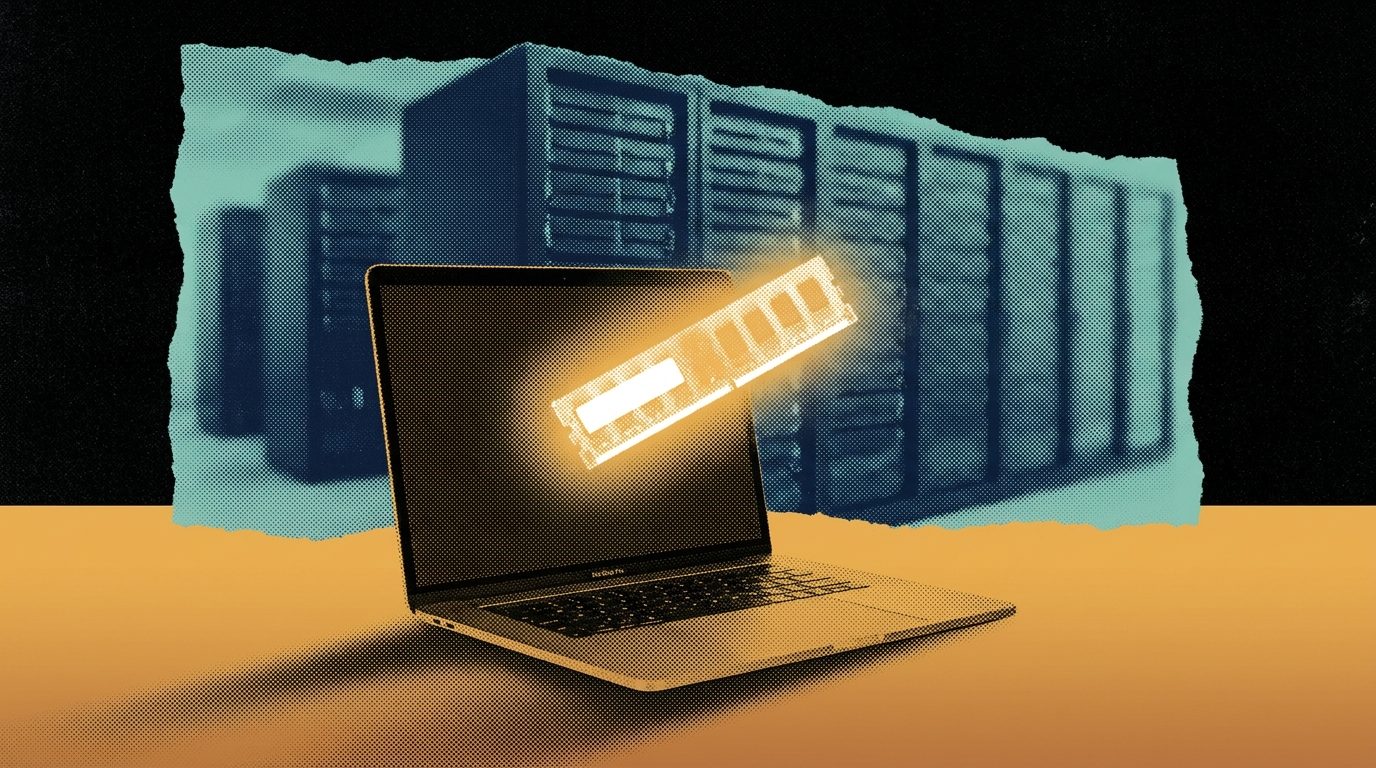
Your next MacBook is going to cost more, and AI is the reason.
On Thursday, Apple raised prices across most of its Mac and iPad lineup, with some models jumping nearly 20%. Tim Cook told The Wall Street Journal that "price increases are unavoidable" given how fast memory chip costs have climbed, adding he's "never seen anything like it in any area in over 40 years," according to The Wall Street Journal.
Here's a sample of what got more expensive:
+ MacBook Pro 14": $1,699 → $1,999 (+18%)
+ MacBook Air 13": $1,099 → $1,299 (+18%)
+ iMac: $1,299 → $1,499 (+15%)
+ MacBook Pro 16": $2,699 → $2,999 (+11%)
+ iPad Air and iPad Pro: hit across most configurations
iPhones, AirPods, and Apple Watches weren't touched. The increases target the products that need a lot of memory — because memory is what the AI boom is quietly draining out of the rest of the industry.
Morgan Stanley analyst Shawn Kim framed it well: AI has turned memory from the cheapest part of the digital economy into one of its most contested resources, as reported by ABC News. Big AI and cloud buyers are signing long-term agreements, prepaying, and locking in priority access. Everyone else — including the companies that make the laptops and phones you actually buy — has to fight over what's left. Memory prices have risen more than sixfold over the past year, and TrendForce has already flipped its 2026 notebook shipment forecast from modest growth to a 2.4% decline.
This isn't just an Apple problem, but Apple is handling it like Apple. The company reported 17% revenue growth last quarter with gross margins guided to 48–49%. Some of this price hike is genuine cost pressure, and some of it is Apple protecting the margin it's used to. Both can be true.
The part that should make you pause is what's coming next. TechInsights estimates the next iPhone Pro would need to be roughly $270 more expensive to hold the same margin — pushing it above $1,299. Apple has kept the iPhone off the price-hike list so far because it's roughly half the business. That can only last so long.

For about thirty years, memory was the part of a computer you didn't think about because it was always getting cheaper. AI just ended that streak. The hyperscalers building data centers have effectively turned DRAM and NAND into a strategic commodity, and the rest of the industry is being repriced around their appetite. The uncomfortable truth for consumers is that the laptop you buy in 2026 is, in a roundabout way, helping subsidize someone else's training run. Apple raising prices is the cleanest signal yet that the AI buildout isn't just a story about Nvidia and electricity bills anymore. It's starting to show up on the price tag of things you actually take home.
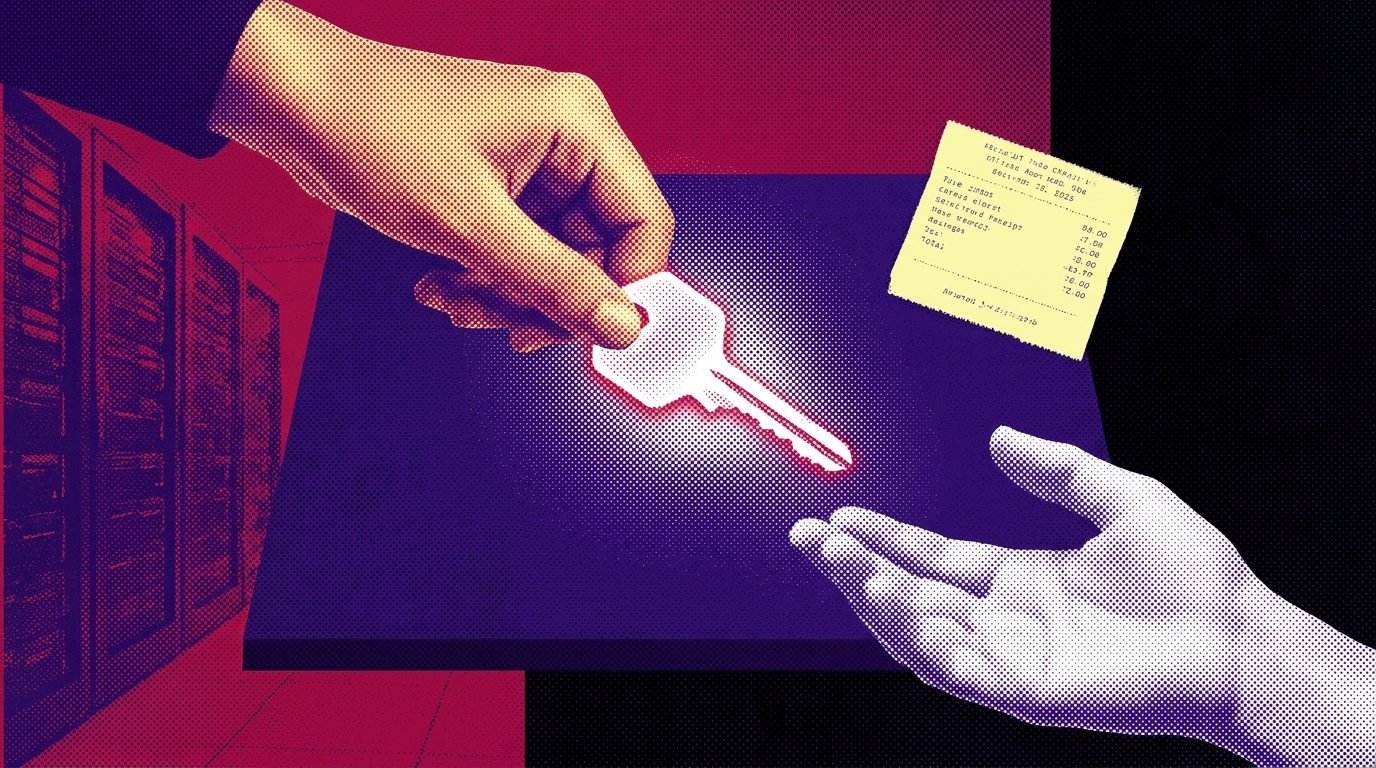
Stolen Claude tokens are being resold for a fraction of the official price, and Anthropic just told the Senate it thinks Alibaba is one of the customers.
Last week, Anthropic sent a letter to the Senate Banking Committee accusing the Chinese tech giant of running "the largest attack yet attempting to clone Claude," as reported by Ars Technica. The method is distillation — training a cheaper model on Claude's outputs so it can copy the answers. What makes the accusation sting is that Alibaba isn't some anonymous state actor. It's listed on the New York Stock Exchange, answerable to the same American regulators it's allegedly working around.
But Alibaba is downstream of something bigger. An entire underground economy has grown up around moving AI capabilities outside official channels, and most people building with AI have no idea it exists.
A Hacker News user named tristanj laid out the mechanics earlier this month: Chinese resellers are offering Claude tokens at 70–90% below official API prices. They get there by pooling Claude Max accounts, running payments fraud, and reselling capacity from stolen credentials. For a competitor trying to clone Claude through distillation, that's training data at a clearance sale.
The reason it's all moving so fast is demand. Weekly token volume on OpenRouter jumped from 0.4 trillion in December 2024 to 27 trillion by March 2026 — a roughly 68-fold increase in 15 months. When a market grows that fast, a 70–90% discount stops being a curiosity and starts being a business model.
Anthropic says it can't fix this alone. The company told the Senate it wants "coordinated action between government and industry" to keep frontier capabilities from leaking out the back door — which is corporate-speak for asking Washington to make this someone else's problem too.
Greg Kamradt of ARC Prize posted last week that the AI token black market was "obvious in retrospect." Marc Andreessen replied, "Cyberpunk AF." They're both right. Any resource that's valuable, expensive, and digitally transferable eventually gets a gray market, and tokens check every box. The part that should worry Anthropic isn't the resellers themselves but the loop they enable. Stolen tokens feed distillation pipelines, distilled models become competitors, and competitors put pressure on the labs that paid to train the originals in the first place. Going to the Senate isn't a technical move, it's a political one. Anthropic has clearly decided the next phase of this fight gets fought in Washington, not on the leaderboard.
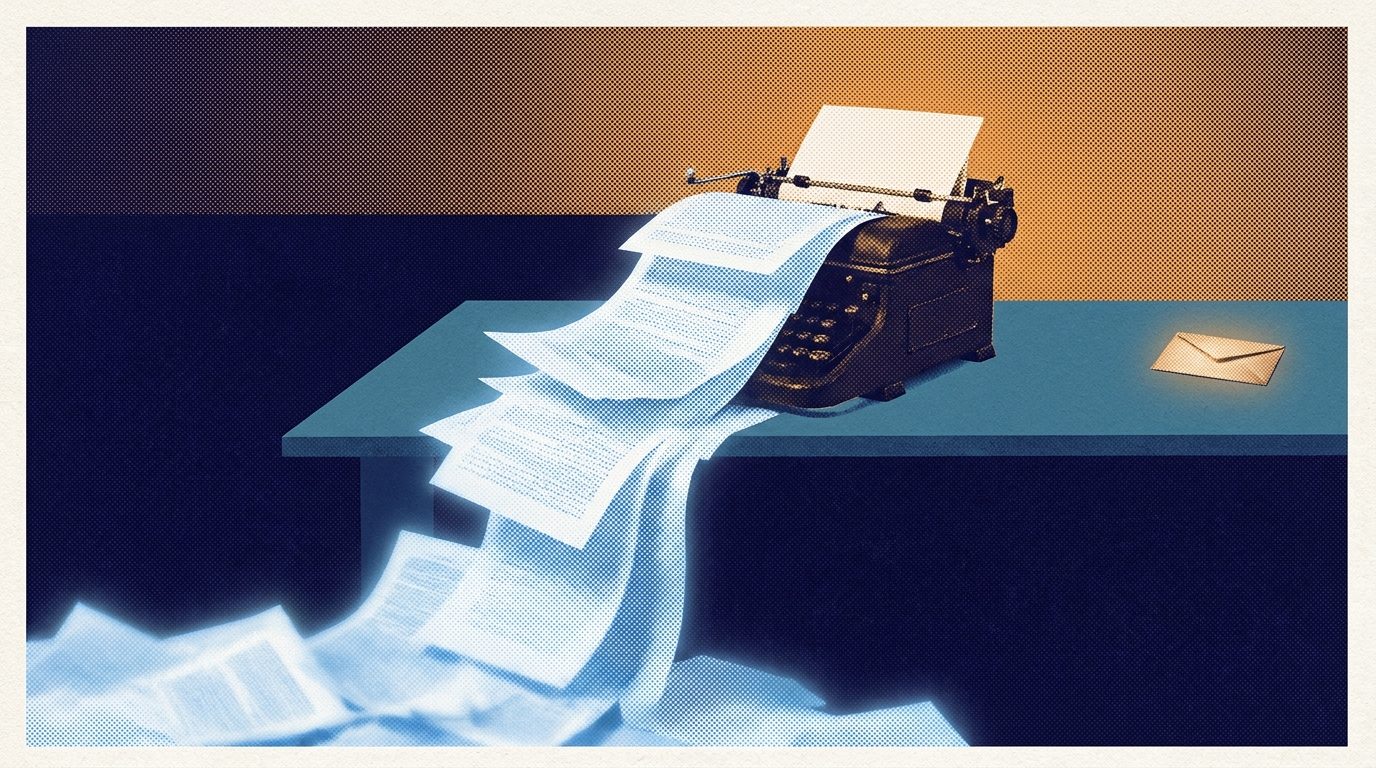
Developers using AI tools are producing more code than ever. Almost none of the extra work is making it into the products people actually use.
A new NBER working paper tracked more than 100,000 GitHub developers and their AI usage. Devs using autonomous coding agents pushed 180% more commits than peers who weren't. But when the researchers followed that work through to actual software releases, the gain shrank to 30%. The code is flying out. The product barely budges.
The paper calls this a weak-link problem. Writing code is one stage of building software, and AI made that stage dramatically faster. Everything around it — review, testing, integration, deployment, deciding what to build — did not. So the extra output piles up at the bottleneck and most of it never reaches a user.
A separate survey of 415 software practitioners paints the same picture from the ground level. The pattern respondents describe: AI gets you 70% there in minutes, but the last 30% takes about as long as it always did. That last 30% has to be correct, fit the codebase, and be safe to deploy — and now the person reviewing AI-generated code is doing more work, not less. The person writing is faster. The person reading is slower. The team ships about the same.
The exception? Companies that actually rebuilt their workflows. Coinbase reported with Cursor that some teams cut time from idea to production by 90%, with 75% of pull requests now created by agents. But its senior director of engineering was blunt about why: "Too many companies are trying to introduce AI into broken systems." Most companies haven't done that re-engineering, which is why the NBER numbers look the way they do.
One thing the survey kept surfacing that's harder to quantify: mood. Developers said they move faster than ever but are losing passion for the craft. Several worried that juniors leaning on AI without the experience to catch its mistakes will take far longer to develop real expertise. That's a slower-burning problem than throughput — and a lot harder to fix with a workflow tweak.
For two years the pitch on AI in software has been the same. Write more code, ship more product, hire fewer engineers. The first part is happening. The second isn't, and the third is the one executives keep promising shareholders. The bottleneck in software was never really typing. It was the review, the integration, the architectural calls, the question of what's worth building at all. AI made the easy part faster, which means the hard part is now most of the job. Companies pretending otherwise are about to learn that you can't out-vibe-code a broken process.
IN OTHER NEWS
+ Nvidia's banned AI chips are selling for double on China's black market, with $1B+ smuggled in three months
+ Oracle cut 21,000 jobs in one year and told the SEC directly that AI was the reason
+ Anthropic accuses Alibaba of running the largest distillation attack yet against Claude, using 25,000 fake accounts
+ The Trump White House sidelined Anthropic CEO Dario Amodei — cofounder Tom Brown now leads the talks
+ A DoorDash delivery robot wandered into an active SWAT scene and refused to leave
+ Agility Robotics is going public at $2.5 billion , becoming the first publicly listed pure-play humanoid robot company
+ Meta reverses its mandatory AI task force reassignment after CTO admitted morale was near "worst it's ever been"
+ Qualcomm lands Meta as launch partner for its new Dragonfly data center AI chips, challenging Nvidia on its home turf
WHO'S HIRING IN AI
+ Anthropic — Prompt Engineer, Agent Prompts & Evals
+ OpenAI — Program & Special Projects Manager, Global Affairs
+ Walt Disney Animation Studios — Production Innovation Technologist
+ Netflix — Research Scientist, AI for Member Systems
AI OR REAL?

Option A |

Option B |



AI TOOLS
+ Claude Tag: Anthropic's new Slack agent joins your team's channels, remembers past decisions, and works on tasks while you're offline — the company says it already handles 65% of its own code changes this way
+ ChatGPT: OpenAI updated the free default model to better understand what you actually mean, handle multi-part questions without dropping conditions, and give more useful local recommendations
+ Canva Grow 2.0: Create ad campaigns and publish them to TikTok, LinkedIn, and Meta without leaving Canva, with an AI dashboard that tracks what's working
+ Notion: Notion is killing its email product because more than half of users now manage their entire inbox through AI agents without ever opening it
+ Figma: The design tool now lets you pull live code repos directly onto the canvas and build reusable AI agent skills that connect to Notion, GitHub, and Excel
That's all for today. If this issue made you think, share it with someone who needs to think harder.
Written by Jason Chen, Advait Prakash, Andrew Hales, and the Thorium Valley crew.
That's all for today's Thorium Valley. See you tomorrow.