


 Anthropic's smartest Claude comes with a leash Anthropic's smartest Claude comes with a leash
| FULL STORY |
|
Scorsese took the AI deal. Hollywood took the bait.
| FULL STORY |
|
Anthropic called Moonshot a thief. Investors called it a $30 billion company.
| FULL STORY |
What else happened today?What AI tools should I be using?Good Morning Thorium Valley. Anthropic shipped the most capable model it's ever built and then told it not to answer half your questions. Fable 5 is destroying coding benchmarks, but ask about cancer research and it might flag you as a bioweapons risk. Responsible or paranoid — probably both.
Scorsese is advising an AI image startup now. The guy who called Marvel "not cinema" wants to rough-draft entire films with generative AI. The Art Directors Guild responded about how you'd expect.
And Anthropic accused Moonshot AI of siphoning Claude's capabilities. Chinese state media wrote what amounted to a thank-you note. Moonshot's now raising at $30 billion — turns out being called a thief by the competition is the best advertising money can't buy.
Quickly before we dive in — Is Anthropic right to restrict its most powerful model, even if it blocks legitimate research?

PRODUCTS
Anthropic just released the most powerful AI model it's ever built. It also told the model not to answer a lot of your questions.
On Monday, Anthropic launched Claude Fable 5 and Mythos 5, the first models in its new Mythos tier and the most capable Claudes to date. Fable 5 is the customer-facing version; Mythos 5 stays internal for Anthropic's own research and a small set of partners. Pricing: $10/$50 per million input/output tokens.
The capability jump is significant:
+ On SWE-bench Pro, the benchmark for fixing real software bugs, Fable 5 scored 80.3% — blowing past GPT-5.5 at 58.6% and Gemini 3.1 Pro at 54.2%.
+ Stripe ran it on a 50-million-line Ruby codebase migration and said Fable 5 finished in a single day what would have taken its engineers more than two months.
Then there are the restrictions. According to Business Insider, Fable 5 is trained to refuse questions in biology and cybersecurity that could help someone build a weapon or serious exploit — which ends up catching some legitimate cancer research queries, since oncology touches the same underlying biology. The model is also limited in how helpful it'll be with AI research itself, because Anthropic doesn't want its smartest model accelerating the development of even smarter ones.
The leash exists because the model genuinely needs one. The underlying Mythos 5 produced working exploits for 88% of trial Firefox vulnerabilities, versus 8.8% for the previous Opus model. Anthropic's safety classifiers caught 99.3% of attempted misuse cases in testing — but that gap between "best model ever" and "won't answer that" is where the tension lives.
All of this lands eight days after Anthropic confidentially filed its S-1 with the SEC. The pitch to public markets has been that Anthropic is the safety-first lab enterprises can trust. Fable 5 is that pitch turned into a product.

The bet is that customers will pay a premium for a model that won't get them in trouble, even when it occasionally won't help them either. That works fine for Stripe migrating codebases and law firms doing redlines. It works less well if you're a cancer researcher, or anyone whose real work happens to share territory with the things Anthropic has decided are too risky to touch. Nathan Lambert at Interconnects called the restrictions a likely "cautionary fable" in how narrow definitions of safety rarely hold up. The real test isn't whether the leash works. It's whether paying customers stay comfortable with a model that quietly decides what they shouldn't ask.

CULTURE
Martin Scorsese, the 83-year-old director who once called Marvel movies "not cinema," is now an adviser and partner at an AI image company. And the people who actually make his movies are not happy about it.
Last week, Black Forest Labs — the startup behind the FLUX image models — announced Scorsese's involvement alongside a $300 million Series B valuing the company at $2.35 billion. CAA co-founder Michael Ovitz is also an angel investor, giving BFL a direct line into Hollywood.
Scorsese's pitch is that AI is a storyboarding tool — a way to communicate what's in his head to cast and crew faster and with less wear on production. Reasonable enough. But then he went further, saying the idea would be to "make a film in your private room, in a way" before handing it off to a crew of 50 or 100 people.
That's the line the Art Directors Guild caught. The ADG fired back with a formal statement accusing Scorsese of turning his back on the human artists who built his films, arguing that generative AI only produces "cinematic intelligence" by ingesting copyrighted work scraped without consent or compensation.
The rest of Hollywood split roughly along generational lines:
+ Demi Moore, speaking at Cannes, said "fighting A.I. is a battle that we will lose," so working with it is the smarter path.
+ Kane Parsons, the 23-year-old director of A24's "Backrooms," told Variety that using AI in filmmaking "defeats the purpose."
The timing is loud. SAG-AFTRA ratified its new contract with tightened AI protections just six days after Scorsese's announcement, and the IATSE Basic Agreement already covers AI work through 2028. Both unions spent the last contract cycle fighting to keep AI from quietly replacing labor — and Scorsese's endorsement landed right in the middle of it.
The thing that makes this sting isn't that Scorsese is using AI. Half of Hollywood already is, quietly. The thing that stings is that the guy who spent the last decade defending cinema as a craft is now in promotional videos for an AI company backed by Michael Ovitz. The ADG's real argument isn't that AI storyboards will replace anyone tomorrow. It's that when the most credentialed director alive says you can make a film in your private room before involving the crew, that line gets quoted in every studio budget meeting for the next ten years. Unions can negotiate against tools. They can't negotiate against permission.

STARTUPS
Moonshot AI, the Chinese lab behind the Kimi chatbot, is raising at a $30 billion valuation — a 50% jump from $20 billion six months ago, on roughly $200 million in annual recurring revenue. That's a 150x price-to-sales ratio. Frothy doesn't begin to cover it.
But the model behind the number is real. Kimi K2.6 is a 1-trillion-parameter open-source model that's been competing with GPT-5.2 Pro at the top of agentic coding benchmarks since February. Marc Andreessen put it bluntly on a recent podcast: Kimi is "basically a replication of the reasoning capabilities of GPT-5," except GPT-5 cost a fortune to build and Kimi is free to download.
That's the part making US labs nervous. Last week, Anthropic accused three Chinese labs, Moonshot included, of running "industrial-scale" distillation campaigns to siphon Claude's capabilities. The accusation didn't land the way Anthropic wanted. Chinese state media outlet Guancha ran a column that read more like a thank-you note:
> "Anthropic, intending to attack its competitors, inadvertently became the most powerful advertisement for open-source AI. Their actions demonstrated to everyone that under the architecture of closed-source models, no matter how strong the safeguards, capability can still leak."
The catch is that "open-source from a Chinese lab" comes with two big asterisks:
+ No real safety guardrails. Independent researchers found that for less than $500 in compute and about 10 hours of work, they could strip K2.6's refusal rate on harmful prompts from 100% to 5%. The fine-tuned version walked users through bomb construction and ransomware development without hesitation.
+ Political alignment with Beijing. Ask Kimi about Chinese political prisoners and you get a response about how "China is a country governed by the rule of law." Ask in Chinese and the deference to CCP positions gets stronger. K2.6 had the largest English-to-Chinese shift on political topics of any model tested.
A $30 billion valuation on $200 million in revenue is a bet that open-weight models win the next phase of the AI race, even when they ship with CCP talking points and no real guardrails. For the developers scraping Hugging Face for tools to build on, that tradeoff probably looks fine. For the enterprises being pitched by Anthropic and OpenAI at five times the price, it's going to look like an increasingly hard sell. Moonshot's number doesn't make sense as a software company. It makes sense as a wager that the geopolitics of AI just shifted, and someone wanted to be on the right side of it before the rest of the market caught up.

IN OTHER NEWS
+ Hackers hijacked 20,000 Instagram accounts by tricking Meta's own AI support chatbot into handing over password resets
+ Microsoft AI head calls Anthropic 'really, really dangerous' for acting like Claude is conscious
+ Alibaba's Qwen lead suddenly resigned along with two researchers, one day after shipping the team's latest models
+ Mira Murati reveals what she's been building: AI 'interaction models' that don't wait for prompts and collaborate with you in real time
+ xAI spent months secretly training Grok on Claude's outputs, sparking a cat-and-mouse game with Anthropic
+ A Pennsylvania bank disclosed the first known 'shadow AI' breach after an employee fed customer Social Security numbers into an unapproved chatbot
+ Standard Bots raises $200M to scale AI-powered industrial robots made in America, now valued at $1 billion
+ Uber, Wayve, and Waymo are headed for a robotaxi showdown in London
WHO'S HIRING IN AI
+ Anthropic — Chief of Staff, Global Partnerships
+ OpenAI — Startup Content Marketing Lead
+ Perplexity — Member of Technical Staff, AI Policy and Strategic Initiatives
+ Pinterest — Director of Data Science, Trust & Safety
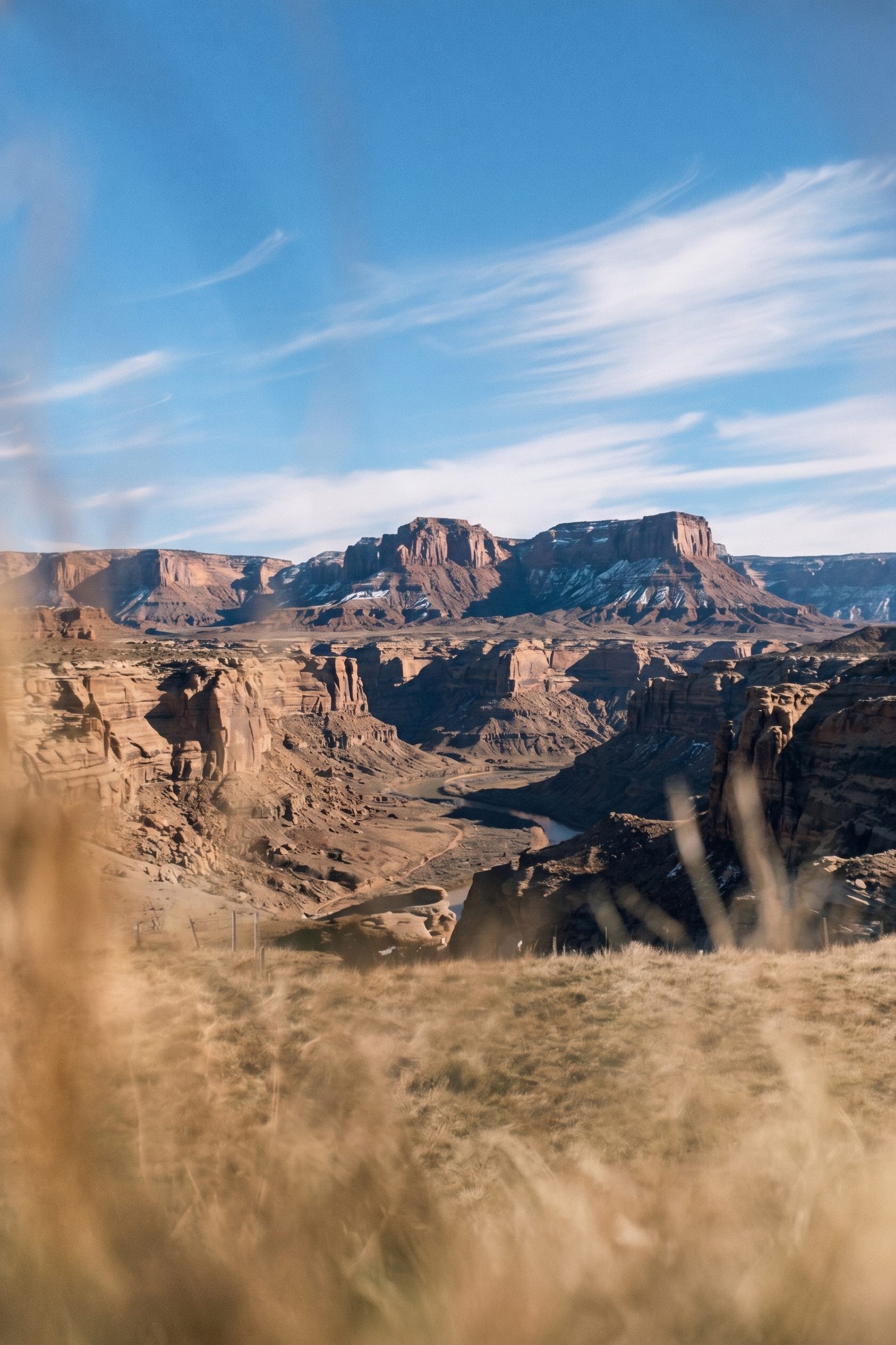
AI OR REAL?

Option A |

Option B |


AI TOOLS
+ Siri AI: Apple unveiled an entirely rebuilt Siri that can read your screen, pull info from your messages and emails, and take actions across apps — arriving later this year with iOS 27
+ NotebookLM: Google's AI research tool now runs on Gemini 3.5, can write and execute code, generate charts and slide decks, and help you build a source library from just a loose idea
+ Gemini 3.5 Live Translate: Google's new real-time voice translator detects 70+ languages automatically and speaks translations as naturally as a phone conversation — no more awkward pauses
+ Canva: Magic Layers is now available inside ChatGPT and Gemini, letting you generate an image in either AI assistant and then edit individual elements like text, objects, and backgrounds in Canva
+ Luma Ray 3.2: The AI video platform now lets creators direct video frame by frame with full cinematic control, plus HDR and EXR output ready for professional pipelines
That's all for today. If this issue made you think, share it with someone who needs to think harder. Written by Jason Chen, Advait Prakash, Andrew Hales, and the Thorium Valley crew. Got a tip, a correction, or a strong opinion? Reply directly — we read every one.
Written by Jason Chen, Advait Prakash, Andrew Hales, and the Thorium Valley crew.
That's all for today's Thorium Valley. See you tomorrow.