


 Anthropic is quietly making more money than OpenAI Anthropic is quietly making more money than OpenAI
| FULL STORY |
|
AI is making us confidently wrong
| FULL STORY |
|
Perplexity's agent pivot is paying off
| FULL STORY |
What else happened today?What AI tools should I be using?Good Morning Thorium Valley. Anthropic is quietly outearning OpenAI. Fifteen months ago their annualized revenue was $1 billion. By late May, $47 billion. Both just filed to go public, and when those S-1s drop, the gap is going to be hard to spin.
Perplexity is watching the IPO rush from a lawn chair. No plans to list before 2028 — their AI agent product is driving a 335% revenue jump, so apparently you can afford patience when the product actually works.
And an MIT study found that four weeks of AI-assisted fact-checking was enough to make people noticeably worse at catching fakes on their own. We're speeding up and getting dumber at the same time. Encouraging.
Quickly before we dive in — Do you think using AI tools is quietly making you worse at parts of your job?
MARKETS
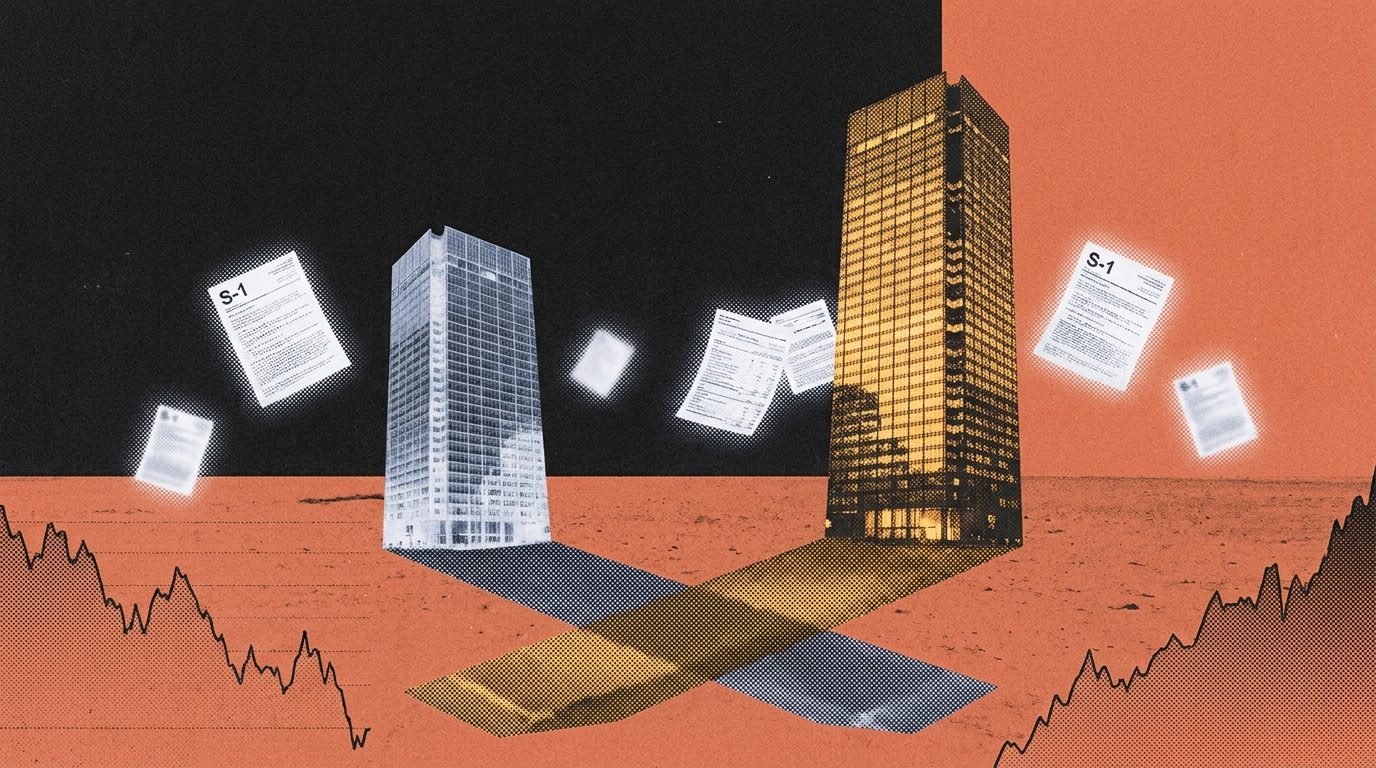
OpenAI is bigger. Anthropic is earning more. Both companies have filed to go public, and that gap is about to get a lot of attention.
OpenAI confidentially filed last week, a few days after Anthropic did the same. Both are racing to Wall Street while public investors still have an appetite for AI risk. The part that's gotten less attention is the revenue gap underneath all of it.
Anthropic's annualized run rate hit about $30 billion in April, according to The AI Corner. OpenAI was at roughly $24 billion. By late May, Anthropic climbed to around $47 billion. Fifteen months earlier, it had been at $1 billion.
OpenAI has more users. Anthropic has the kind of business that bankers actually want to talk about:
+ Enterprise-heavy mix: About 80% of Anthropic's revenue comes from business customers. OpenAI still leans heavily on consumer subscriptions.
+ Big-contract growth: More than 1,000 business customers now spend over $1 million a year with Anthropic — a number that doubled in less than two months.
+ New buyer dominance: Among companies buying AI tools for the first time in 2026, Anthropic is capturing roughly 73% of the spend.
+ Capital efficiency: Per dollar raised, Anthropic generates about $0.23 in ARR. OpenAI generates about $0.11.
A lot of that traces back to a bet Anthropic made early: position itself as the AI you trust with the work that actually matters. Safety, reliability, fewer hallucinations. For a while the pitch sounded like marketing. Now it's showing up in procurement decisions. One top-20 US financial institution chose Claude over GPT for contract review after a six-week evaluation found Claude hallucinated at roughly a third the rate. At that scale, that's not a feature preference — it's risk reduction.
What started as a safety narrative has quietly become an enterprise sales asset, and it maps unusually well onto how Fortune 500 budgets actually flow.
The timing adds pressure. SpaceX is reportedly close to its own IPO, and public markets only have so much capital they'll commit to risky categories at once. The conventional wisdom on Wall Street is that whoever goes second between OpenAI and Anthropic will be in a much better spot than whoever goes third.
When OpenAI's S-1 eventually lands, the story Wall Street reads will be a side-by-side. OpenAI still loses money at an extraordinary clip. Anthropic's losses are smaller, its enterprise base is stickier, and its capital efficiency is roughly twice as good. None of that guarantees Anthropic wins long term — OpenAI's whole bet is that its training spend produces step-change models that unlock revenue lines the efficiency math can't predict. But for the first time, the burden of proof is shifting.

For three years the AI story has been told in benchmark scores and release notes. The IPO process is about to force a different conversation, one about who actually makes money and how. OpenAI built the brand. Anthropic built the business. If the public market decides it values one of those things more than the other, the pecking order in AI is going to look very different by the end of the year.

RESEARCH
The more we lean on AI to think, the worse we get at noticing when it's wrong.
A new MIT Media Lab study tracked 67 people over four weeks as they used an AI assistant to evaluate news headlines. With the AI helping, their accuracy jumped 21%. Without it, by week four, their ability to spot fake content had dropped 15.3% from where they started. The skill they thought they were building had quietly eroded underneath them.
Real headlines were fine — accuracy on those barely budged. It was fake content they got worse at catching, which is the one thing the AI was supposedly helping with.
The mechanism is uncomfortable: to know whether AI is wrong, you need to already know enough to catch it. And that knowledge comes from doing the work yourself. Once you stop doing it, the muscle atrophies — fast.
"We're implicitly assuming that people have the expertise to tell whether the AI is right or wrong," Zana Buçinca, an incoming MIT professor who studies human-AI interaction, told TIME. "But expertise forms through effortful engagement. If we circumvent the need for that, we risk eroding the skill itself."
The output looks polished, the answer comes fast, and the brain reads that as competence — even when it shouldn't. The work feels done. The understanding isn't there.
The story we keep telling ourselves about AI is that it handles the boring stuff so we can focus on the important stuff. The research keeps showing the opposite. The skills going first are the ones we use to evaluate whether the AI is even right, which means by the time it gets something seriously wrong, we'll be the least equipped we've ever been to notice. That isn't a future problem. It's already showing up four weeks into a study where people thought they were getting sharper.

STARTUPS
Perplexity's bet on agents is showing up in the numbers — and the company has drawn a line in the sand on its IPO.
CEO Aravind Srinivas has said Perplexity has no plans to IPO before 2028, regardless of what Anthropic or OpenAI do with their own filings. The reason that timeline feels plausible is a product called Computer, the AI agent Perplexity rolled out that handles multi-step work across files, browsers, and enterprise tools instead of just returning search results.
The traction has been fast:
+ Sacra pegs annualized revenue near $500 million as of April — a 335% year-over-year increase the research firm ties directly to Computer's launch.
+ Perplexity's Chief Business Officer told VentureBeat Computer has been "the single biggest productivity unlock in our entire history as a company." His example: pulling a data query through Slack that would have required pinging a data scientist and waiting hours.
+ Early enterprise customers say Computer has completed the equivalent of three years of work in four weeks. Perplexity now claims more than 50,000 organizations on its Enterprise platform.
The harder problem is trust. Selling a curious search tool to consumers is a very different thing from convincing a CISO to let an agent take actions inside production systems. Gartner expects more than 40% of agentic AI projects to be cancelled before 2027 due to unclear ROI and weak risk controls. Perplexity has the traction — it doesn't yet have a long enterprise audit history.
Srinivas has also been honest about what happens above them. If Anthropic or OpenAI stumble on the way to the public markets, AI valuations across the cohort get re-rated, and there's no sugar-coating the ripple effects.
A year ago Perplexity looked like a clever search product still hunting for a real business. The agent pivot has changed that conversation faster than most people expected, and the 2028 IPO target says the company believes Computer can carry the momentum without piggybacking on whatever happens to the bigger labs. The next twelve months are less about benchmarks and more about whether large companies are actually willing to hand real work over to an agent built by a startup. Search got Perplexity in the door. Whether it stays in the room is up to Computer.

IN OTHER NEWS
+ Google will pay SpaceX $920 million per month for access to 110,000 Nvidia GPUs housed in xAI's data centers
+ Hackers hijacked over 20,000 Instagram accounts by tricking Meta's AI support chatbot into handing over password resets
+ xAI reportedly spent months secretly training Grok on outputs from Anthropic's Claude
+ Nvidia acquires predictive AI startup Kumo AI for more than $400 million
+ GitHub Copilot bills jumped from $29 to $750 overnight after switching to token-based pricing
+ Reid Hoffman leaves Microsoft's board after a decade to go 'founder mode' with an AI drug discovery startup
+ The lawsuits that could give AI its 'Big Tobacco' moment are piling up
+ A federal judge blocked the Pentagon from labeling Anthropic a supply chain risk, calling the move 'Orwellian'
WHO'S HIRING IN AI
+ Anthropic — Product Manager, Compute Platform
+ OpenAI — Analytics Engineer, Safety Systems
+ xAI — Writing Specialist
+ S&P Global (Kensho) — Contract Investment Banker, Generative AI — Finance
AI OR REAL?

Option A |

Option B |




AI TOOLS
+ Siri AI: Apple unveiled an entirely rebuilt Siri at WWDC 2026 — it can now hold real conversations, read what's on your screen, take actions across apps, and gets its own dedicated app
+ NotebookLM: Google's research tool now runs code, generates charts and slide decks, and can start a project from a loose idea by finding and organizing web sources for you
+ Apple Shortcuts: You can now describe an automation in plain English and Apple Intelligence builds the entire workflow for you — no manual setup required
+ Devin Desktop: Cognition rebuilt Windsurf into a multi-agent coding dashboard where you can run parallel AI coders on different parts of a project at the same time
That's all for today. If this issue made you think, share it with someone who needs to think harder. Written by Jason Chen, Advait Prakash, Andrew Hales, and the Thorium Valley crew. Got a tip, a correction, or a strong opinion? Reply directly — we read every one.
Written by Jason Chen, Advait Prakash, Andrew Hales, and the Thorium Valley crew.
That's all for today's Thorium Valley. See you tomorrow.