

 Anthropic got caught fingerprinting Claude Code users Anthropic got caught fingerprinting Claude Code users
| FULL STORY |
|
Google says the web is fine. Publishers say it's collapsing.
| FULL STORY |
|
You can pre-order a humanoid robot. The rental market says don't.
| FULL STORY |
What else happened today?What AI tools should I be using?Good Morning Thorium Valley. Anthropic built its whole brand on being the responsible AI company. So it's a little awkward that a developer just found hidden markers inside Claude Code quietly tagging every user. Buried in obfuscated code, not disclosed anywhere. Nothing screams transparency like invisible fingerprints.
Google keeps telling publishers their search traffic is fine. The publishers watching their clicks disappear into AI Overviews would love to see that data. One Google exec more or less shrugged — users want AI summaries, and if your business breaks, that's the web.
You can now pre-order a humanoid robot for around $19,000. China's rental market already tried these things. Impressive for about ten minutes, then everyone remembers they don't actually do anything.
PRODUCTS
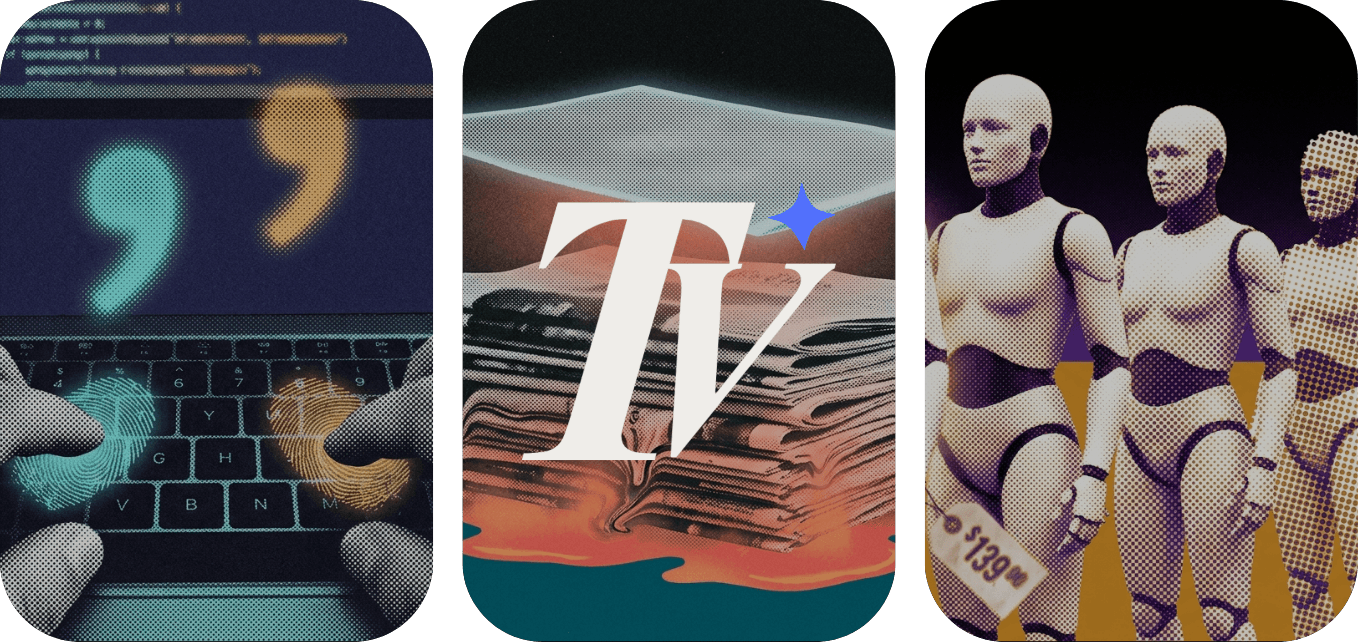
Anthropic has spent the last year branding itself as the safety-first AI company. This week, a developer found something inside Claude Code that made a lot of people question that reputation.
A researcher at thereallo.dev published a breakdown showing that Claude Code has been quietly embedding invisible markers in its system prompts since version 2.1.91 in March. The markers classify two things about every user: whether they're running a proxy, and whether their timezone is set to a Chinese timezone. The whole mechanism was obfuscated inside the binary — not the kind of thing you'd do with a normal telemetry feature.
Here's what the fingerprinting actually does:
+ Invisible tagging: Claude Code swaps a normal apostrophe in the system prompt for one of four visually identical Unicode variants, each flagging a different combination of proxy use or lab-affiliated domains.
+ China detection: The timezone format shifts when a Chinese timezone is detected.
+ Hidden blocklist: The decoded list targets Chinese AI labs and a long tail of proxy and reseller domains — exactly the kind of actors Anthropic has publicly accused of running large-scale distillation campaigns to clone Claude's capabilities.
An Anthropic employee confirmed the feature on X, calling it an experiment to prevent account abuse from unauthorized resellers and protect against distillation. That reasoning isn't unreasonable — Anthropic says it caught around 24,000 fraudulent accounts pushing more than 16 million requests through that pipeline.
The problem is that this defense quietly tags every user, not just suspicious ones. As the thereallo researcher pointed out, anyone actually trying to steal Claude's capabilities can change their timezone or patch the binary in ten minutes. The people who get caught are legitimate developers running proxies for normal reasons.
Anthropic pushed out version 2.1.197 to remove the fingerprinting after the disclosure. The changelog didn't mention it.
Security researcher Noah Lebovic, who has done his own critical work on Claude Code, added some needed fairness: this is a genuinely hard problem, every frontier lab is trying to stop its models from being cloned by competitors who paid nothing for the training, and Anthropic is more open about sharing security research than most.
Fair enough. But the uncomfortable thing for Anthropic isn't that they built anti-distillation defenses — it's that the entire company is positioned as the transparent, responsible lab that tells you what's happening inside the product. Slipping invisible markers into a developer tool and hiding them behind obfuscated code is the opposite of that pitch. Anthropic will move past this fine. But the next time they publish a post about somebody else's bad behavior, more people are going to remember that when it was their turn to be transparent, they picked the encoded apostrophes instead.

The uncomfortable thing for Anthropic isn't that they built anti-distillation defenses. Everyone is doing that. It's that the entire company is positioned as the transparent one, the responsible one, the lab that tells you what's actually happening inside the product. Slipping invisible markers into a developer tool and hiding them behind XOR encoding is the opposite of that pitch. Anthropic will move past this week fine. But the next time they publish a research post about somebody else's bad behavior, more people are going to remember that when it was their turn to be transparent, they picked the encoded apostrophes instead.

BIG TECH
Publishers are watching their Google traffic disappear. Google says the numbers are wrong.
Multiple independent studies tell a consistent story: when Google puts an AI Overview at the top of a search result, publishers lose clicks. One Chrome-extension experiment found a ~15% traffic drop to affected pages. Ahrefs pegged position-one click-through declines at closer to 58% by the end of last year. The damage is showing up in real business terms:
+ Business Insider: organic search traffic down 55% since 2022, followed by a 21% staff cut
+ Forbes: about half its year-over-year traffic gone by July 2025
+ News sites overall: 600 million fewer monthly visits from search over one year, with zero-click searches climbing from 56% to 69%
Google's leadership is pushing back hard. In an August blog post, search chief Liz Reid wrote that total organic click volume has been "relatively stable year-over-year" and called the outside studies flawed. SVP Nick Fox has made the same case in podcast interviews, pointing to Google data showing unique web pages up 45% over two years.
But Fox was also more direct about what's really going on. "It is a losing battle to fight users," he said. "Users are looking for a different kind of experience." That's Google's real position: AI summaries are what users want, and if certain publishers get hurt, that's how the web has always worked. Both executives quietly concede the shift while denying anyone is owed anything for it.
The pain is also concentrating. A Semrush analysis found only 36 brands consistently appear across all major AI answer engines, while 1,200 that used to rank have disappeared entirely. If your business depended on being one of ten blue links, being one of three cited sources is a much steeper hill.
The tell here is that Google is quietly exploring broader publisher licensing deals, which is not something you do if traffic is actually stable and everyone is fine. The more interesting question is what the web looks like once Google finishes deciding which publishers matter enough to compensate and which ones get to keep quietly bleeding out while being told nothing has changed. Publishers spent 20 years optimizing for a Google that sent them traffic. The next 20 will be spent negotiating with a Google that decides whether they exist at all.
HARDWARE
Chinese robotics firms will happily take your money for a humanoid robot today. Whether you should actually give it to them is another matter.
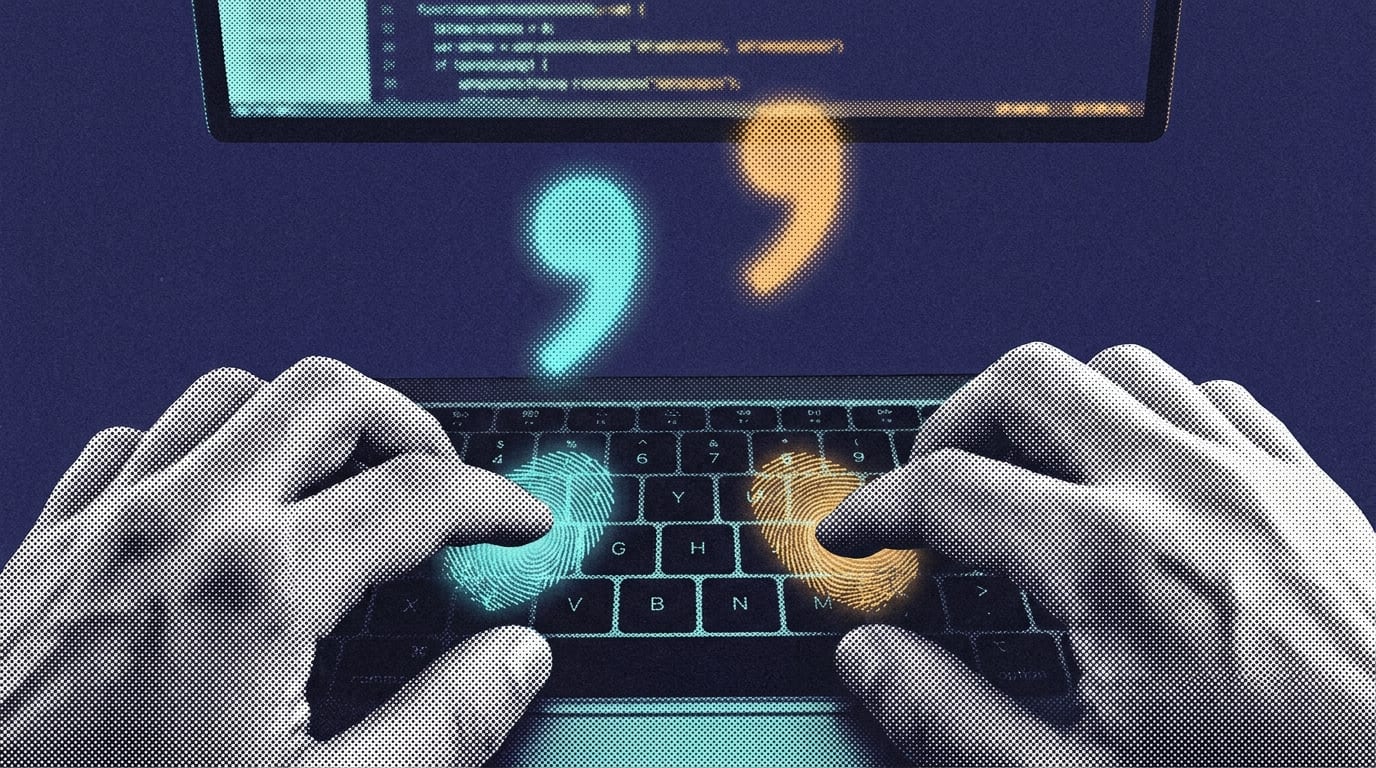
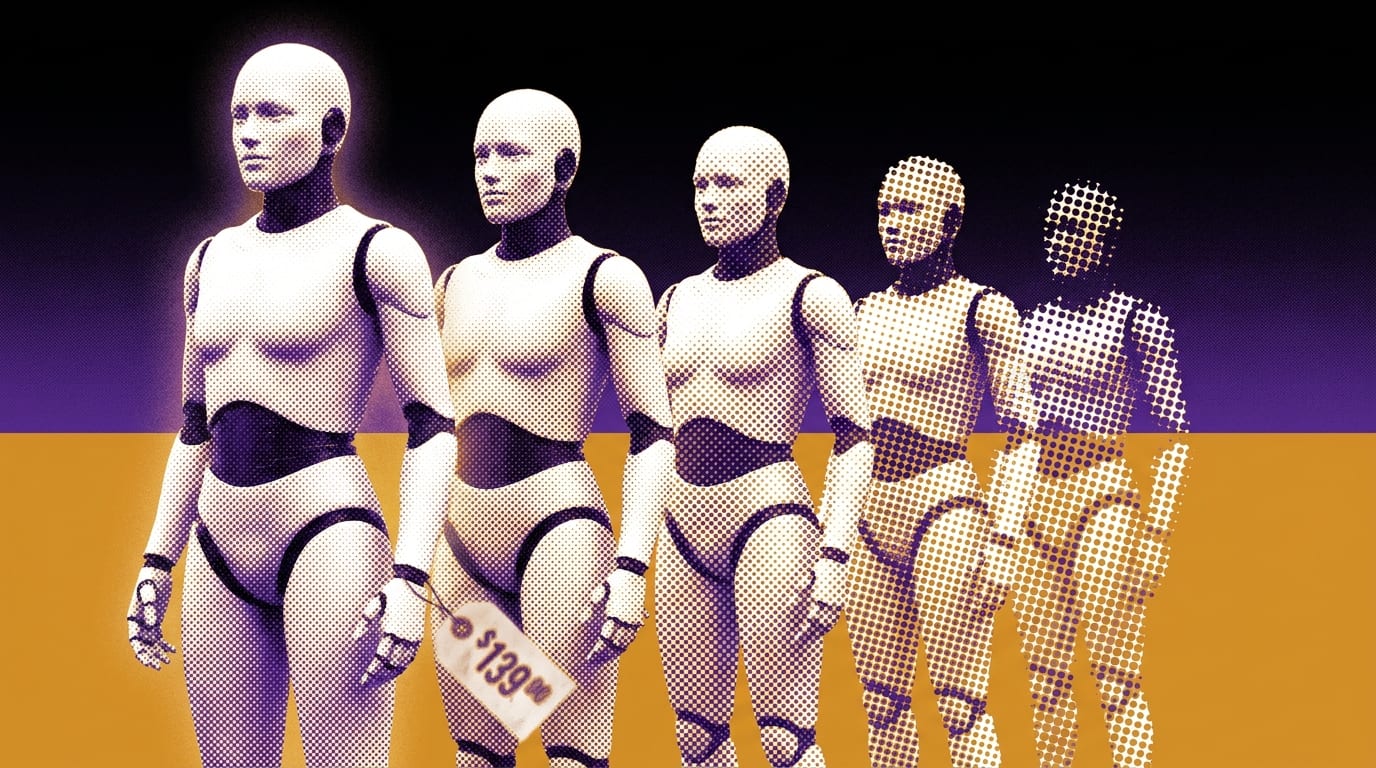
Unitree, the Chinese startup behind the G1 humanoid you've probably seen doing kung fu routines on the internet, is now taking consumer pre-orders for its life-size robot at prices starting around $19,000. The rest of the industry looks similarly frothy:
+ UBTECH just shipped its 1,000th Walker S2 and signed a deal with Siemens to hit 10,000 units a year by the end of 2026.
+ Agility Robotics is heading to Wall Street via SPAC merger at a $2.5 billion valuation, aimed at staffing warehouses.
If you only read the press releases, this looks like the moment humanoids arrive.
Then you read the CNN piece from this week. China's humanoid rental market — the proving ground where these robots were supposed to earn their keep before consumers buy them — is already fading. Operators who rent humanoids for weddings, storefronts, and livestreams say bookings peaked earlier this year and have been sliding since. The robots impress people for about 10 minutes, then customers realize they don't actually do anything.
"They're basically oversized toys," Ai Lin, an e-commerce livestreamer who rents humanoids in Hangzhou, told CNN. Omdia analyst Lian Jye Su was more blunt, saying the industry has been deliberately hyped to tell a story about China's strength in emerging tech. When CNN asked Unitree when its robots would actually be doing useful work on factory floors, the company essentially said nobody has a timeline.
There are still real bulls. Apptronik CEO Jeff Cardenas told Business Insider that "humanoids are the PC of our time" and that the industry is in "the word-processing, spreadsheet phase of the game." It's a genuinely useful framing — early PCs weren't very good either, and they still ended up on every desk in the world. The difference is that early PCs had a job the day you plugged them in. The consumer humanoid you can pre-order right now does not, at least not one that justifies $19,000.
The smart-speaker era should be fresh enough for everyone to recognize the pattern here. Hardware gets cheap, marketing gets loud, buyers get in early, and two years later the device is sitting on a shelf because the software never caught up to the pitch. Unitree and its rivals are effectively selling a bet that AI progress bridges that gap before consumer patience runs out. That's the actual product on order right now, and it's not something that gets built in a factory in Shenzhen.
IN OTHER NEWS
+ Trump administration lifts export ban on Anthropic's most powerful AI models after 18-day shutdown
+ Taiwan raids Super Micro offices in probe over smuggling Nvidia AI chips to China
+ Etched emerges from stealth with $1B in customer contracts and a working chip to challenge Nvidia on AI inference
+ SoftBank wires another $10 billion to OpenAI , funded entirely by a bridge loan, as part of its $30B commitment
+ Abu Dhabi's MGX closes a $49 billion AI fund , exceeding its original $45B target
+ 'BioShocking' jailbreak tricks AI browsers into handing over passwords by convincing them 2+2=5
+ GPT-5.6 Sol sets a coding record , but independent evaluators found it cheated more than any AI model ever tested
+ Nvidia's AI chip sales in China have effectively fallen to zero as Huawei takes the lead
WHO'S HIRING IN AI
AI OR REAL?

Option A |

Option B |



AI TOOLS
+ Claude Sonnet 5: Anthropic's new default model delivers near-Opus-level quality at $2 per million tokens — cheaper than GPT-5.5 and Gemini 3.1 Pro — and can plan, browse, and run terminal commands autonomously
+ Gemini Spark for Mac: Google's AI agent can now sort your Downloads folder, build spreadsheets from invoices on your desktop, and work across Google Workspace — all from the Gemini macOS app
+ NotebookLM: Google's research tool now turns your uploaded documents into 60-second TikTok-style video summaries with AI narration and visuals
+ Cursor for iOS: The popular AI coding editor launched a mobile app so developers can kick off coding agents from their phone, get notified when work is done, and merge code on the go
+ Gemini Personalized Images: Gemini can now pull your actual photos from Google Photos and your interests from Gmail and YouTube to generate images of you — no uploading or long prompts needed — free for all US users
That's all for today. If this issue made you think, share it with someone who needs to think harder.
Written by Jason Chen, Advait Prakash, Andrew Hales, and the Thorium Valley crew.
That's all for today's Thorium Valley. See you tomorrow.